Introduction to perpendicular lines
Perpendicular lines are a fundamental concept in geometry, yet their applications extend far beyond the classroom. From architectural design to computer graphics, these lines form the backbone of structures, layouts, and even complex engineering projects. In this article, we’ll dive deep into what perpendicular lines are, their mathematical properties, how to identify them, and their practical uses in daily life. By the end, you’ll not only understand perpendicular lines but also appreciate their importance in both theoretical and practical scenarios.
What Are Perpendicular Lines?
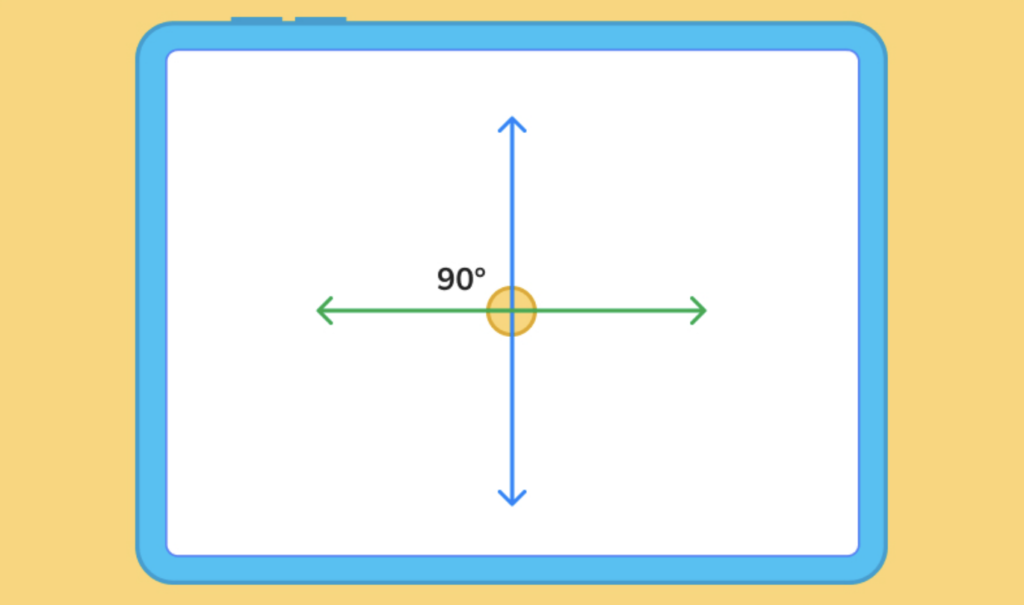
Perpendicular lines are two lines that intersect at a 90-degree angle, also known as a right angle. This right angle is what distinguishes perpendicular lines from other intersecting lines that may cross at any angle. When you think of a corner of a square or a rectangle, you are essentially visualizing lines in action.
A key feature of perpendicular lies is that they create symmetry in shapes and forms. This property makes them essential in various fields, such as geometry, engineering, and design. The term “perpendicular” comes from the Latin word perpendiculum, which means “plumb line,” highlighting its historical use in construction and measurement.
In mathematical notation, if two lines are perpendicular, they are often represented as AB⊥CD, where the symbol ⊥ denotes perpendicularity. Recognizing these lines is fundamental in solving geometric problems and is also the basis for understanding slopes in coordinate geometry.
Identifying Perpendicular Lines in Geometry
Identifying perpendicular lines is straightforward once you know what to look for. In plane geometry, two lines that intersect to form four right angles are perpendicular. This property ensures that no matter where the lines intersect, the angles remain consistent at 90 degrees each.
In the coordinate plane, perpendicularity can be verified using slopes. If the slope of one line is m1 and the slope of the other line is m2, the lines are perpendicular if the product of their slopes is −1, i.e., m1⋅m2=−1. This method is particularly useful in algebra and calculus when working with equations of lines.
Even in real-life settings, perpendicular lnes can be spotted in everyday objects. Street intersections, window frames, and bookshelves all contain lines that meet perpendicularly. Understanding how to identify these lines can improve your spatial awareness and even aid in architectural or interior design projects.
The Mathematical Properties of Perpendicular Lines
Perpendicular lines have several mathematical properties that make them unique. Firstly, as previously mentioned, the angles formed at the intersection are right angles, each measuring exactly 90 degrees. This property forms the foundation of right triangles and many polygonal structures.
Secondly, in coordinate geometry, the slopes of perpendicular lines are negative reciprocals of each other. For instance, if one line has a slope of 2, the perpendicular line will have a slope of −21. This property is crucial for analytical geometry, helping to solve problems involving line equations and distance calculations.
Another interesting property is symmetry. Perpendicuar lines often act as axes of symmetry, especially in figures like rectangles, squares, and rhombuses. This symmetry is not just visually appealing but also simplifies calculations in geometric proofs and real-world engineering designs.
Perpendicular Lines in Right Triangles
One of the most common places perpendicular lines appear is in right triangles. A right triangle is defined as a triangle with one angle exactly equal to 90 degrees. The two sides that form this right angle are perpendicular to each other.
This perpendicular relationship is critical for applying the Pythagorean theorem, which states that the square of the hypotenuse equals the sum of the squares of the other two sides. Without perpendicular lines, this foundational theorem in geometry wouldn’t exist, and many engineering and construction calculations would become more complex.
Additionally, right triangles with perpendicular sides are widely used in trigonometry. The perpendicular lines define the “opposite” and “adjacent” sides relative to a given angle, enabling the use of sine, cosine, and tangent functions in both theoretical and practical applications.
Perpendicular Lines in Coordinate Geometry
Coordinate geometry provides a powerful way to work with perpendicular lines algebraically. As mentioned earlier, the negative reciprocal slope condition is a primary tool. For example, if a line passes through points (1,2) and (3,6), its slope is calculated as 3−16−2=2. Any line perpendicular to this must have a slope of −21.
Using the point-slope form of a line equation, we can then determine the exact equation of a perpendicular line passing through a given point. This technique is essential for solving intersection problems, designing plots in construction, or modeling situations in physics and engineering.
Another advantage of coordinate geometry is visual representation. By plotting perpenicular lines on a grid, students and professionals alike can better understand angles, slopes, and distances, making abstract concepts more tangible.
Practical Applications of Perpendicular Lines
Perpendicular lines are not just academic—they are everywhere in our daily lives. In architecture, they provide structural stability. Buildings, bridges, and roads often rely on perpendicular lines to ensure that walls and beams meet at right angles, which enhances strength and load distribution.
In technology, perpendicular lines are vital in design software, computer graphics, and 3D modeling. Pixels on a screen, axes in graphs, and coordinate grids in CAD programs all utilize perpendicular lines to maintain accuracy and alignment.
Even in everyday tasks, perpendicularity matters. For instance, when hanging a picture frame, leveling shelves, or installing tiles, ensuring lines are perpendicular guarantees balance and visual harmony. Recognizing and applying perpendicularity can save time and improve precision in both DIY projects and professional work.
Perpendicular Lines vs. Parallel Lines
Understanding the difference between perpendicular and parallel lines is crucial for a complete grasp of geometry. While perpendicular lines intersect at right angles, parallel lines never intersect, regardless of how far they extend.
This distinction has significant implications. For example, in design and engineering, parallel lines are often used for symmetry and spacing, whereas perpendicular lines provide structural integrity and angle formation. Recognizing when to use each type of line is essential for functional and aesthetically pleasing designs.
Mathematically, parallel lines have identical slopes, while perpendiclar lines have slopes that are negative reciprocals. This clear distinction makes it easier to categorize lines in algebraic problems and practical applications.
Real-Life Examples of Perpendicular Lines
Perpendicular lines are everywhere, often unnoticed. Street grids in many cities are designed using perpendicular lines to simplify navigation and land use. The right-angle intersections create an organized and predictable urban layout.
In sports, perpendicular lines are crucial. Consider a basketball court: the free-throw line, baseline, and center line are all perpendicular to one another, ensuring fair gameplay and accurate measurements.
Even in nature, perpendicularity appears in structures like crystal formations or certain plant stems and leaf arrangements. Observing these patterns can deepen our appreciation for geometry in both natural and human-made environments.
The Role of Perpendicular Lines in Advanced Mathematics
Beyond basic geometry, perpendicular lines play a significant role in vector mathematics, linear algebra, and calculus. In vector analysis, two vectors are perpendicular if their dot product is zero. This concept extends to multidimensional spaces and has applications in physics, engineering, and computer graphics.
In linear algebra, perpendicularity relates to orthogonal vectors and matrices, essential concepts for solving complex systems of equations and optimizing solutions. Orthogonal projections, for instance, rely on perpendicular lines to compute distances efficiently.
In calculus, perpendicula lines help determine normal lines to curves, which are crucial in optimization problems, physics simulations, and tangent-normal analyses. Understanding perpendicularity in these advanced contexts opens doors to a wide array of mathematical and real-world applications.
Fun Facts About Perpendicular Lines
Did you know that perpendicularity has fascinated humans for centuries? Ancient civilizations, such as the Egyptians, used perpendicular lines when constructing pyramids to ensure precise angles and structural balance.
In art, perpendicular lines are a key component of perspective drawing, helping artists depict depth accurately. The horizon line and vanishing points rely heavily on perpendicular relationships to create realistic scenes.
Even in puzzles and games, perpendicular ines often play a central role. Sudoku grids, chessboards, and Tetris pieces all rely on perpendicular intersections to maintain structure and order. This simple geometric principle truly has universal significance.
Conclusion
Perpendicular lines are far more than a geometric concept taught in classrooms—they are a universal principle that shapes our world. From architecture and urban planning to computer graphics and advanced mathematics, these lines play a pivotal role in creating order, precision, and balance.
Understanding perpendicular lines allows you to solve complex problems, design structures accurately, and appreciate the geometry hidden in everyday life. By mastering their properties, applications, and mathematical significance, you unlock a fundamental tool that supports both creativity and logic.
Whether you’re a student, professional, or simply curious, appreciating perpendiular lines enriches your understanding of the world and sharpens your analytical skills. The next time you notice a right angle, take a moment to recognize the invisible geometry at work—because perpendiular lines are everywhere, quietly holding the world together.